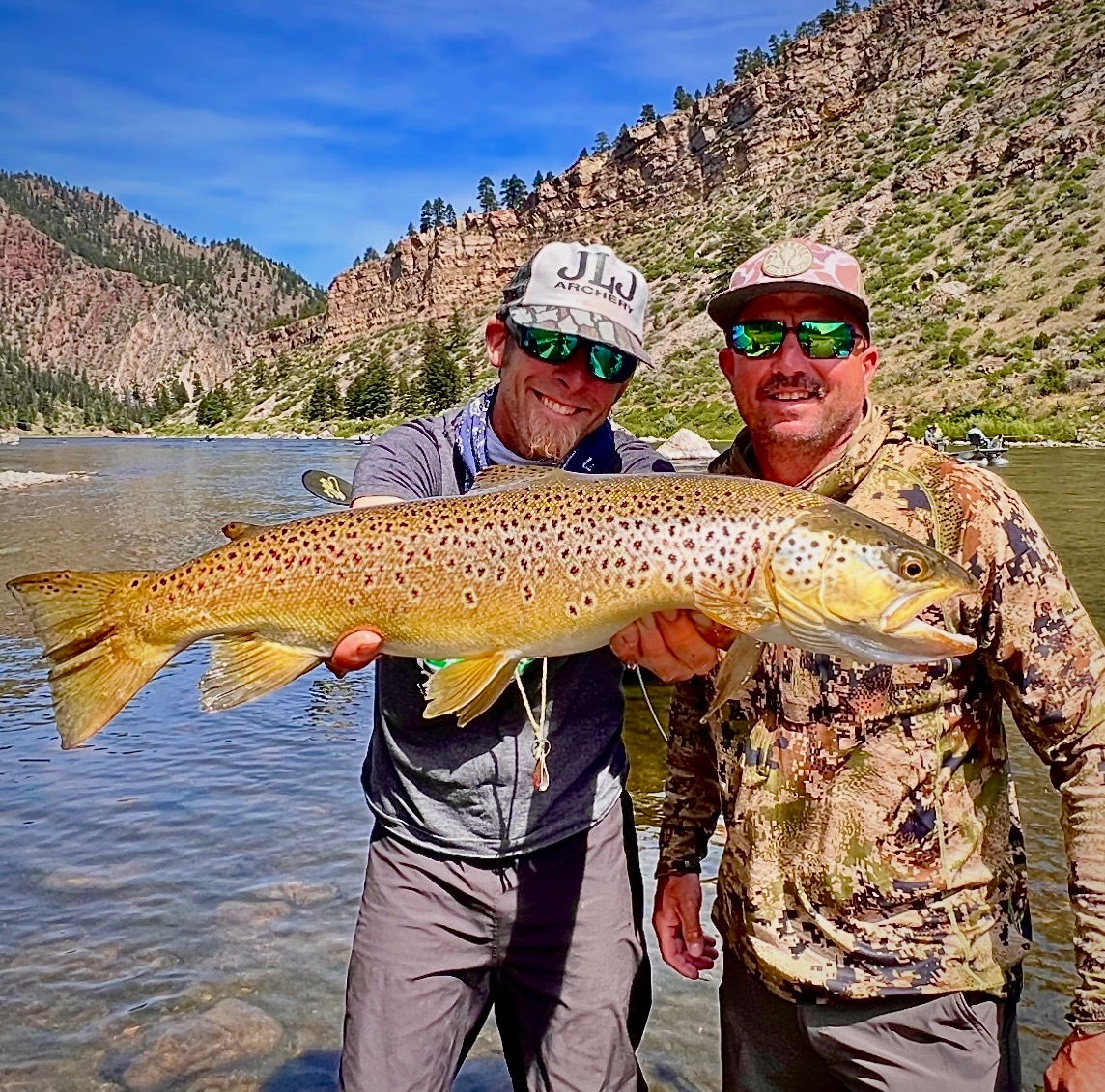
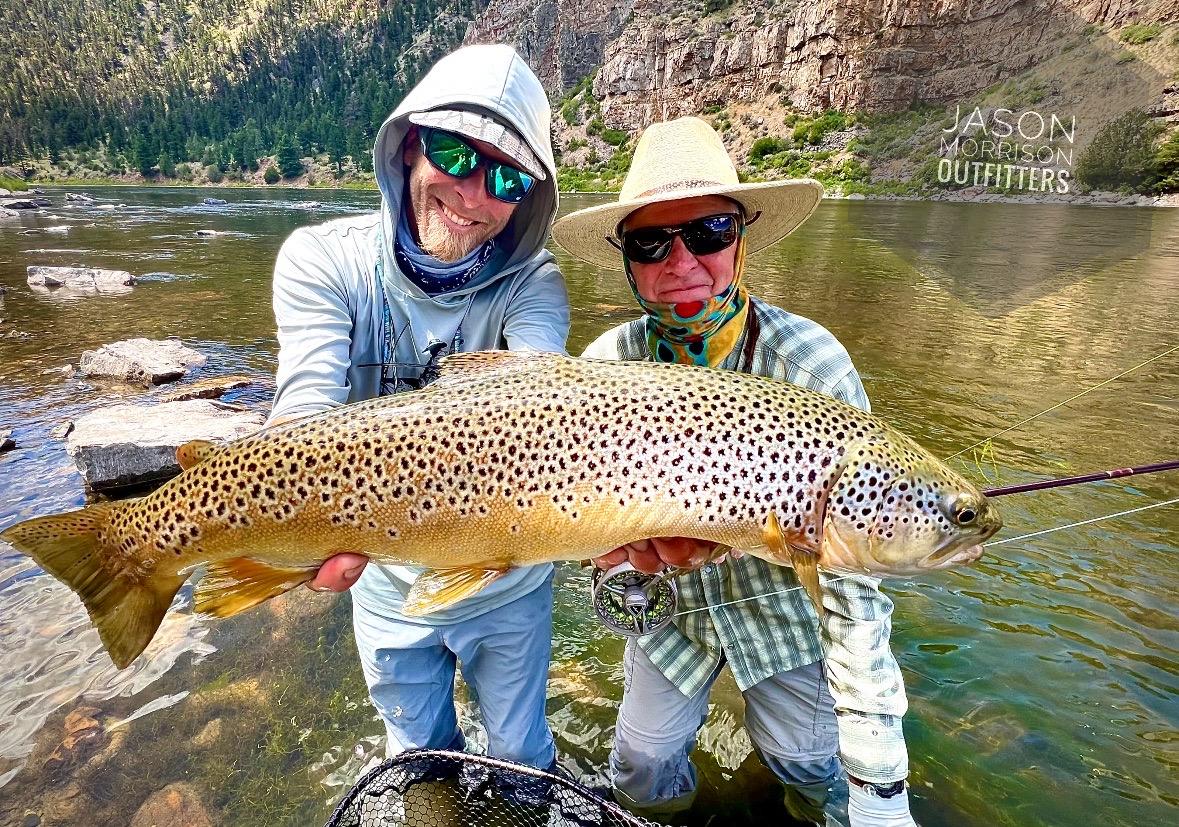
The Bighorn River runs cold and steady out of Yellowtail Dam, cutting through big Montana landscapes on its way east. Because of regulated flows and consistent water temperatures, it is one of the most reliable and iconic tailwater fisheries in the West. The river here is broad and deceptively powerful, with long weed beds, clean gravel runs, heavy seams, and deep bends. In addition, it stays fishable and consistent when other rivers across the region blow out entirely.
As a result, anglers who want a true tailwater experience travel here specifically for this water. This place is built for precision, presentation, and connecting with strong trout in a river that rewards those who read it carefully. There is simply nothing quite like it.
How We Fish It –
We fish dry flies, nymphs, and streamers depending on the season and conditions. Most of the best water is covered by drift boat, since this lets us reach long stretches of prime structure efficiently. However, we also wade fish select stretches when conditions call for it.
Dry-fly fishing can be excellent when hatches line up correctly. For example, bank edges, riffle edges, and softer inside water are where trout sip steadily and punish sloppy drifts. These fish are strong and technical. Therefore, a day on the Bighorn is defined by reading current, managing your drift, and staying ready — because the river can turn a small window into a sudden burst of action.
The Fish –
Wild rainbow trout and brown trout dominate this fishery. Fish in the 14–20 inch range are common, and larger trout show up regularly in the right runs, weed edges, and deeper buckets. Moreover, the Bighorn is known for producing strong tailwater fish that feed heavily, live in current, and fight with serious energy. Consequently, it remains one of the most recognized and well-regarded trout rivers in Montana.
In short, if you want classic tailwater structure, technical fish behavior, and a river that can fish well day after day, this is one of the best places to find it. Indeed, few rivers anywhere match its consistency.
What Makes the Bighorn Different –
This fishery is unlike anything else in Montana. Here is why.
- First, it is a dam-controlled tailwater with a steady seasonal rhythm. As a result, everything from water clarity to fish position and hatch timing is more predictable here than on most other rivers in the region.
- Additionally, the river changes character as it moves downstream. This means different stretches can feel like completely different fisheries depending on where you are and what the water is doing that day.
- Finally, beyond its core trout fishing, the system supports other species in certain reaches. In other words, the Bighorn offers more range than its reputation as a trout river alone might suggest.
Gear and Logistics –
We match gear to the water and conditions. For instance, fly rods, spinning tackle, and baitcasting setups are all available depending on what we are fishing.
On the river we run a drift boat to cover water efficiently and access the best stretches throughout the day. Wade fishing is also available on select sections of river. We provide fly rods, all your flies, and essential gear including leaders, tippet, and everything else you need on the water. Just show up ready to fish — we handle the rest.
Trip Details –
- License: A valid Montana fishing license is required. You can purchase one online through Montana Fish, Wildlife & Parks or at local vendors throughout the state.
- Clothing: Montana weather changes quickly. Therefore, layered clothing is recommended throughout the season.
- Gear: Fly rods, flies, leaders, tippet, and all essential tackle are provided.
- Lunch: A full shore lunch with snacks and drinks is included. In addition, custom options are available on request.
Food and Drinks –
Every full-day trip includes a shore lunch with plenty of snacks and drinks throughout the day. We believe a great meal is an important part of a great day on the water.
Want something special? In that case, we are happy to customize your lunch. For example, we can set up streamside — just let us know when you book and we will make it happen.